What girl - Jeff's trapped in a mine; fell into a well; considering early withdrawal of his principle from an IRA; worried about the outcome of the 2024 presidential election ...

Although it has been the subject of many spoofs and misquotes, the one situation that Timmy never needed saving from in the entire history of the show was falling down a well.
September 12, 1955 -
Another of Orson Welles' great Shakespearean films, Othello, finally opened in New York City on this date.
The movie was shot over three years and production was stopped twice, mainly because Welles ran out of money. He then starred in the films The Third Man and Prince of Foxes. When he made The Black Rose, Orson Welles insisted that the coat his character wore be lined with mink, even though the lining would never be visible in the finished film. The producers acquiesced to this demand. When the shoot was over, the coat disappeared. In Othello, Orson Welles can be seen wearing the same coat, complete with mink lining.
September 12, 1958 -
The ultimate drive-in movie, The Blob, premiered on this date. (Great bar bet - the movie's theme song was written by Burt Bacharach and Mack David (Hal David's brother))
The actual Blob, a mixture of red dye and silicone, has never dried out and is still kept in the original five-gallon pail in which it was shipped to the production company in 1958 from Union Carbide. It was put on display over the years as a part of the annual Blobfest, held over a three-day period each summer in Phoenixville, PA, which provided a number of the shooting locales for the film. In addition to displaying the Blob and miniatures used in the shooting, the event features a reenactment of the famous scene in which panicked theatergoers rush to exit the town's still-functioning Colonial Theater, as well as several showings of the film.
September 12, 1959 -
That's why we call it Bonanza...Bonanza...Bonanza...
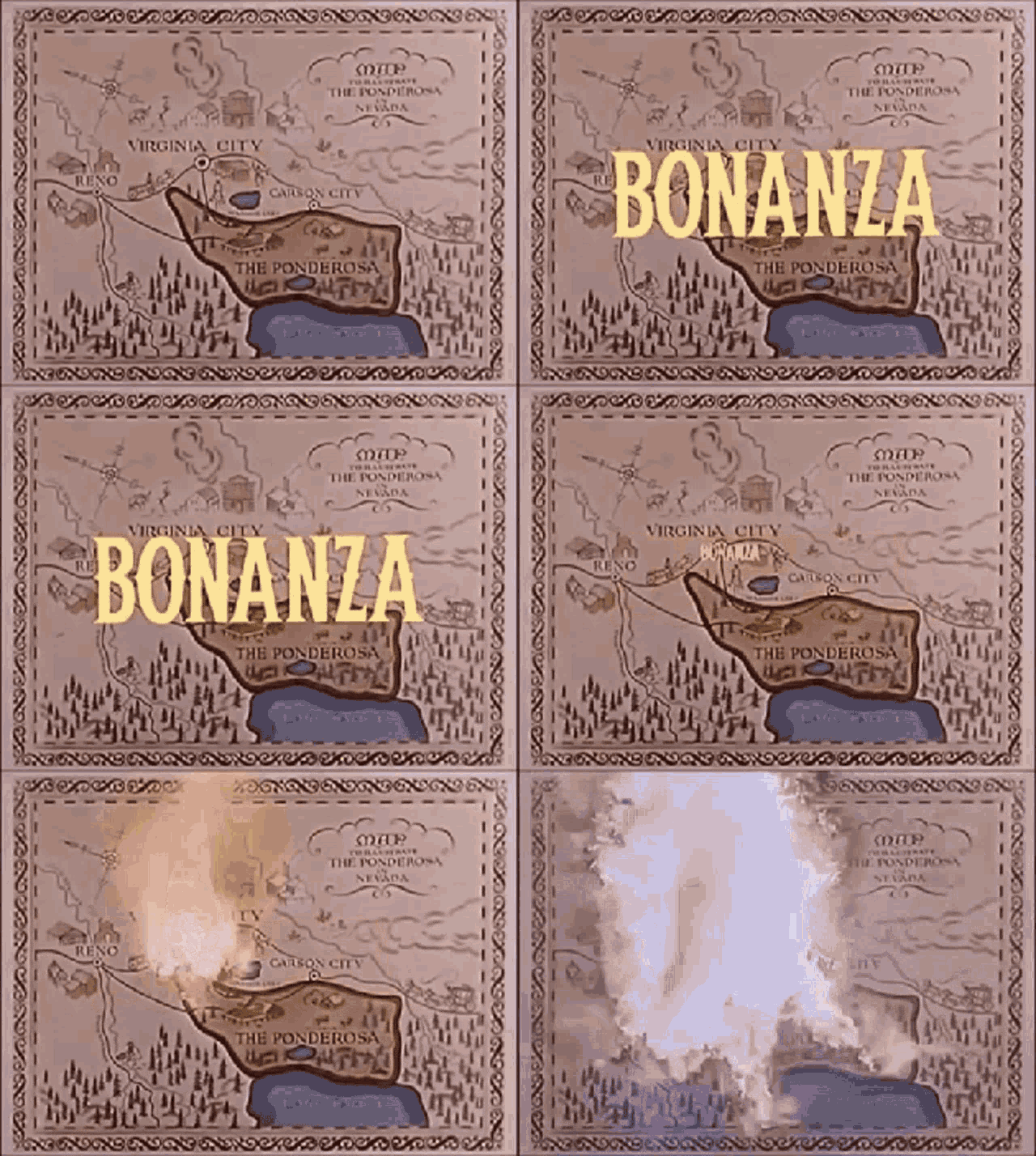
Bonanza, the first US television series to be broadcast in color, premiered on NBC-TV on this date.
Most viewers have only heard the famous theme song by Jay Livingston and Ray Evans played as an instrumental. The theme song actually had lyrics and there is footage of the lead actors singing those lyrics. Lorne Greene, Dan Blocker and Michael Landon sang a lyric version of this famous instrumental theme for the pilot, but it never aired.
Johnny Cash recorded his own version of the theme song.
September 12, 1961 -
The Looney Tunes short, Prince Violent, directed by Friz Freleng and starring Bugs Bunny and Yosemite Sam, was released on this date.
Sam, ostensibly a Viking, has an elephant aide for some inexplicable reason.
September 12, 1966 -
CBS-TV premiered Family Affair on this date.
The show almost moved to ABC following its cancellation, but the idea was nixed because that network already had a show with a similar theme, The Brady Bunch.
(come on you want to sing it: Buffy, Buffy come back to me ...)
September 12, 1966 -
NBC television premiered The Monkees, a sitcom about four guys in a rock band on this date.
When the TV series was about to be renewed for a third season, The Monkees wanted to change it from a half-hour sitcom to an hour-long variety show where they would introduce new artists. However, NBC gave the group an ultimatum: stick with the format as it was or be cancelled. They stuck to their guns and, as a result, the series was cancelled after two seasons on the air.
September 12, 1970 -
Long tails and and ears for hats...
Josie and the Pussycats premiered on CBS-TV on this date.
Hanna-Barbera wanted to change Valerie to a Caucasian even though she was already established as African-American in the Archie comics, so they wanted to fire Patrice Holloway who had been cast as Valerie's singing voice. But Danny Janssen, who was producing the real-life group's Capitol album, refused to fire Holloway and Hanna-Barbera relented.
September 12, 1972 -
Another spin-off from the All In The Family Series, Maude premiered on CBS-TV on this date.
Maude was Norman Lear's favorite show from his own production company.
September 12, 1972 -
The animated series Wait Till Your Father Gets Home (a spin-off from a segment on Love American Style,) voiced by Tom Bosley, Joan Gerber, Jack Burns, David Hayward, Kristina Holland, and Jackie Haley premiered ABC-TV on this date
There was a live action version of the pilot filmed prior to the animated version for CBS. The live action version would have starred Van Johnson as a version of the "Harry Boyle" character.
September 12, 1972 -
The comedy series, Temperature Rising, starring James Whitmore, Cleavon Little, David Baily, Joan Van Ark, Reva Rose, and Nancy Fox, premiered on ABC-TV on this date.
Produced by William Asher, of The Patty Duke Show and Betwitched fame, this series is unique in that it was aired in three different formats and cast line-ups during it's network run.
September 12, 1978 -
The show James L. Brooks and friends created after the Mary Tylet Moore series ended, Taxi, starring Judd Hirsch, Jeff Conaway, Marilu Henner, Tony Danza, Christopher Lloyd, Danny DeVito, and Andy Kaufman premiered on this date.
Andy Kaufman had invented the persona for his character in his comedy act prior to working on the show, including the famous line "tank-you-veddy-much". It was the show's writers that came up with the name of Latka Gravas. Kaufman created Latka's language, which he taught to Carol Kane for her role as Simka, by inviting her to dinner, and refusing to let her speak English.
September 12, 1986 -
Captain EO, starring Michael Jackson and directed by Francis Ford Coppola, made its gala premiere at Disneyland in Anaheim, CA and at Disney's Epcot Center in Orlando, FL on this date.
At a cost of about one million dollars per minute of film, this was, minute for minute, the most expensive motion picture of all time.

Today in History -
September 12, 490 B.C. –
It looked like it was going to be a pretty bleak day for Western Civilization. The Greeks, who were not yet Ancient or Classical, were facing a massive invasion by the Persians. Persia was not yet part of the Axis of Evil, but was pretty nasty just the same. They had more soldiers than the Greeks, better cavalry, and better weapons. (They did not have ouzo, moussaka, or the mastery of sodomy, however; it may have been envy of those quintessentially Greek achievements that drove them to invade.)

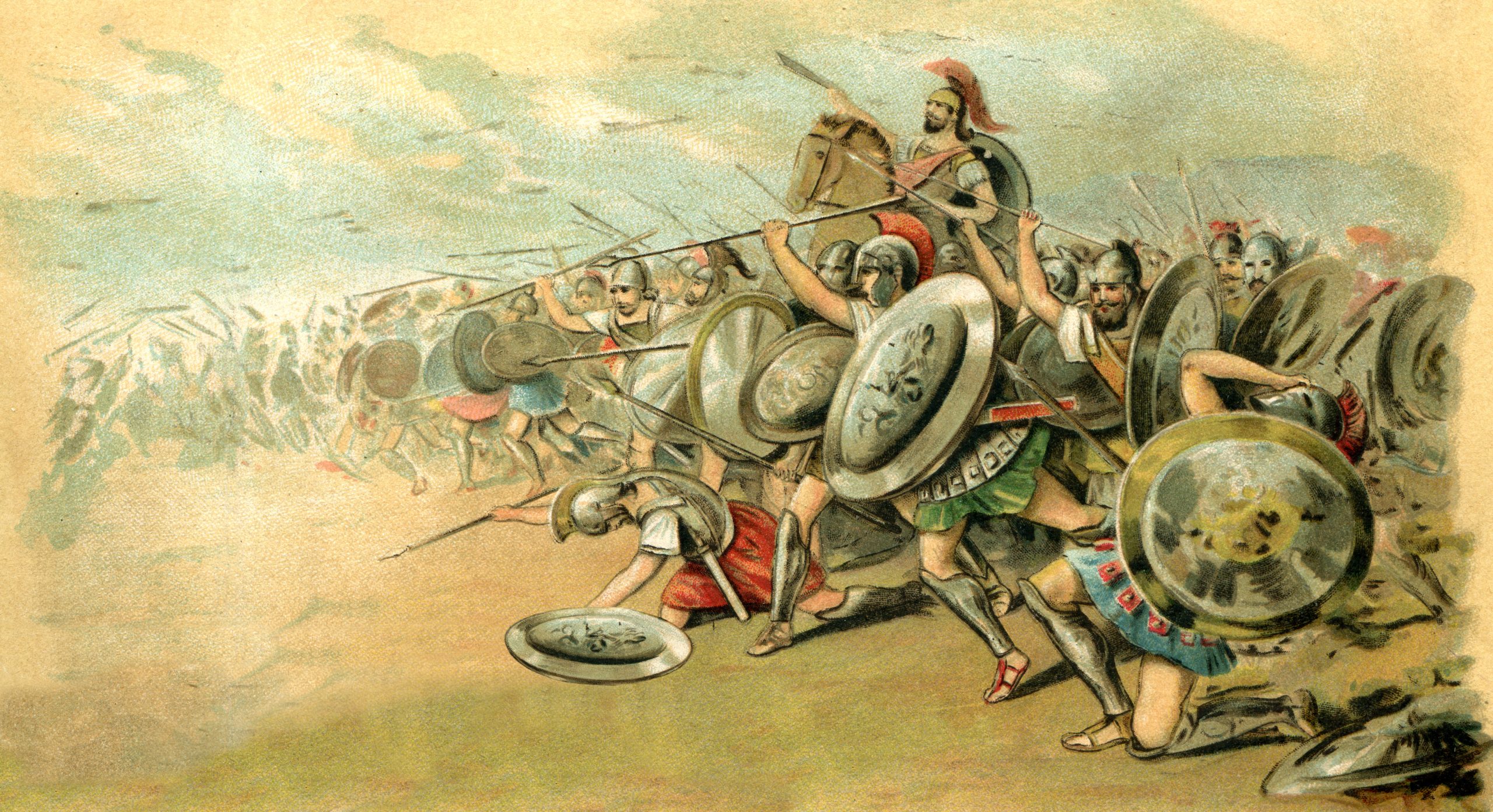
Despite his strong defensive position, entrenched in the hilly terrain around Marathon, Uncle Milti was afraid that the superior numbers of the Persians would allow them to fight through the Greek defenses and destroy Western Civilization. In order to prevent this, he launched an offensive.
It caught the Persians off guard, driving them off the land, into their ships, and back toward Persia.
This was the Battle of Marathon, at which Western Civilization was saved for the first time – ensuring a future for diet cola, fat-free potato chips, and pay-per-view sports. (The Battle of Marathon is not related to the Marathon Bar or Marathon Man, but neither of them could have come about without it.)
Here is a special note to the strange people who run marathons. After winning the battle, a runner named Pheidippides was supposedly sent back to Athens to announce the victory.

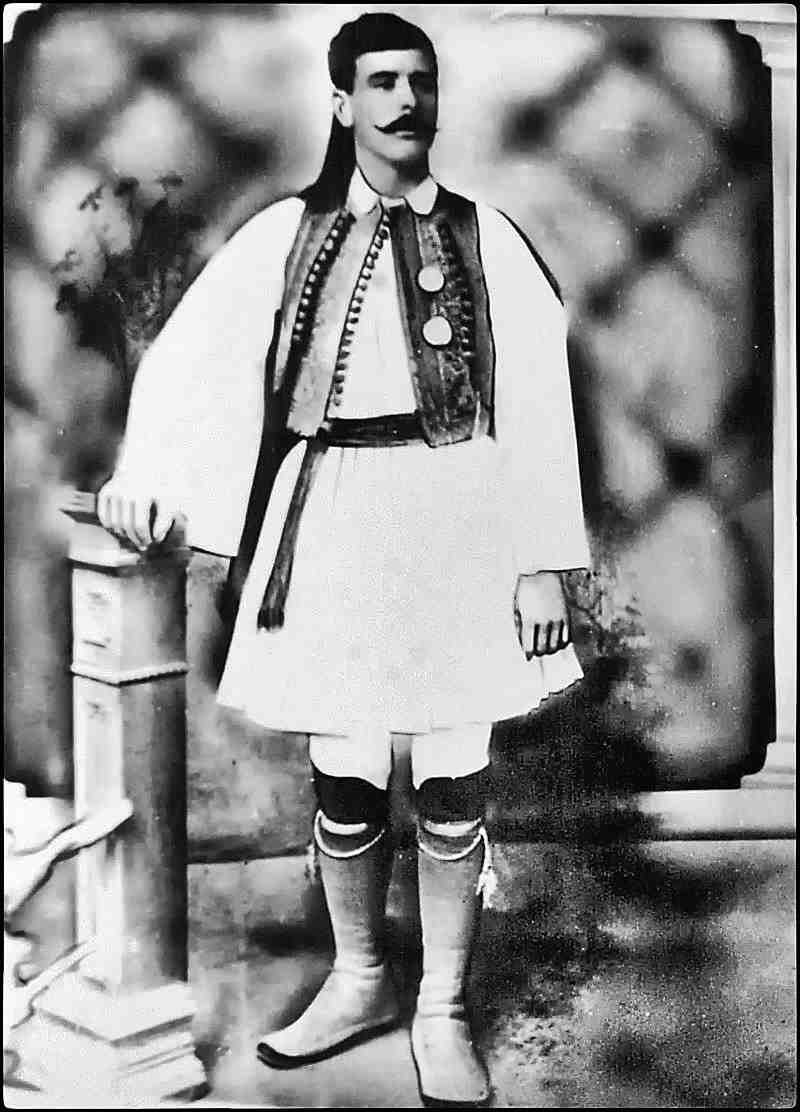
At the 1908 Olympic Games in London, the marathon distance was changed to 26 miles to cover the ground from Windsor Castle to White City Stadium, with 385 yards added so the race could finish in front of King Edward VII's royal box. After 16 years of extremely heated discussion, this 26.2-mile distance was established at the 1924 Olympics in Paris as the official marathon distance.
Remember all this the next time you run a race.
September 12, 1609 -
The explorer Henry Hudson sailed up the river which eventually came to be called the Hudson River, on this date. He was on an expedition for the Dutch East India Company, trying to find a passage to Asia - the Northwest Passage. This was back when Europeans believed that North America was a rather small land mass, and if they could just find a way through it, they could get to the Asian markets. The Dutch were not great masterminds it appears.
Henry Hudson sailed up the river, anchoring his ship at what is now West 42nd Street and the Hudson River (which was curiously named after him.) He was hoping to get tickets to see Six or at least Christmas Spectacular Starring the Radio City Rockettes before it closed. When he discovered that he was at least 350 years too earlier and that the only tickets available were the all - Native American version of Strange Interludes, he immediately got back on his boat and went up as far as the site of modern day Albany, turned around, and went back to Amsterdam.
September 12, 1683 -
Friar Marco d'Aviano, sent by Pope Innocent XI to unite the outnumbered Christian troops in the besieged city of Vienna, spurred them to victory on this date. The Turks left behind sacks of coffee which the Christians found too bitter, so they sweetened it with honey and milk and named the drink cappuccino after the Capuchin order of monks to which d'Aviano belonged.
An Austrian baker created a crescent-shaped roll, the Kipfel, to celebrate the victory. Empress Marie Antoinette later took it to France where it became the croissant.
September 12, 1878 -
On this date, a magnificent phallic symbol was erected on the bank of the Thames. Despite its name, it doesn’t really have anything to do with Cleopatra.
The obelisk has a twin in New York's Central Park, also named Cleopatra's Needle.
It has nothing to do with Cleopatra, either.
There’s another in Paris, though it isn’t the twin of either London’s or New York’s (which would have made it a triplet). And yes—you guessed it—it also has nothing to do with Cleopatra.
September 12, 1940 -
The Lascaux Caves in France, with their prehistoric wall paintings, were discovered outside Montignac, France, in the Dordogne region by four teenagers who stumble upon the ancient artwork (15,000 to 17,000 years old) after following their dog down a narrow entrance into a cavern, on this date.
There are more than 600 paintings and 1,500 engravings in the cave. The paintings consisting mostly of animal representations (horses), are among the finest examples of art from the Paleolithic period. It was opened to the public at one point, but closed in 1963 because the paintings were fading due to the artificial light used to illuminate the cave.
September 12, 1959 -
While Americans were home watching Bonanza on this date, the Soviet Union launched Lunik II toward the Moon aboard a Luna 8K72 carrier rocket. It was the first man-made object to reach the Moon from Earth.
It was the Soviet's second attempt to launch a rocket to the moon and the first successful attempt when it landed two days later. It's data-collecting mission lasted 33.5 hours.
September 12, 1977 -
The body of Stephen Biko was discovered on the floor of a jail cell in Pretoria on this date. The South African civil rights activist had been beaten and tortured six days earlier, during an interrogation in Port Elizabeth.
Police officials claim that Biko probably suffered the fatal injuries when he "fell out of bed."
September 12, 1993 –
Over a period of time, if you have a successful show, then you have a devoted audience. I feel you owe something to them. That goes for everybody - writers, camera operators, actors, studio executives, etc. Sadly, I've realized it's a responsibility that very few people live up to.
Famous Godzilla, Perry Mason and Ironside actor and Nipple Rouge entrepreneur Raymond Burr died after a battle with liver cancer on this date.
September 12, 1994 -
After a night of boozing and smoking crack, Frank Corder stole a Cessna P150 and crashed it into the south lawn of the White House on this date.

And so it goes

No comments:
Post a Comment