While I am not a tequila man myself, I would not turn a Frozen Margarita down on a hot and humid day.
July 24 1937 -
The Looney Tunes short, Porky's Badtime Story, directed by Bob Clampett, and starring Porky Pig, was released on this date.
Both characters wear trousers here as part of their work attire. Porky seldom would be seen in pants going forward.
July 24, 1939 -
Paramount Pictures' William Wellman's action adventure film, Beau Geste, starring Gary Cooper, Ray Milland, Robert Preston, Brian Donlevy, and Susan Hayward premiered in the US on this date.
At the film's world premiere, the first reel of the 1926 silent version of Beau Geste was shown just before the entire 1939 sound version, in an effort to demonstrate how far films had advanced in thirteen years. This almost backfired because the 1939 film, apparently, followed the 1926 one extremely closely, and some of the first-night critics were annoyed, rather than pleased at this, feeling that the 1939 version should have been more imaginative. However, this did not keep the 1939 version from becoming a smash hit and a film classic.
July 24, 1946 -
Paramount Studios released the film-noir classic, The Strange Love of Martha Ivers, starring Barbara Stanwyck, Van Heflin, Lizabeth Scott and Kirk Douglas (his film debut,) on this date.
Kirk Douglas earned this, his debut role, with the help of his old drama school friend, Lauren Bacall. Bacall knew that producer Hal B. Wallis was looking for fresh talent and she suggested Douglas to him. She encouraged Wallis to watch a play featuring Douglas. When he did, Wallis was so impressed by the performance that he cast Douglas in this film.
July 24, 1948 -
... Crumbly Crunchies are the best
Look delicious on your vest
Serve them to unwanted guests
Stuff the mattress with the rest....
A great Warner Bros. cartoon directed by Chuck Jones, Haredevil Hare, and starring Bugs Bunny, was released on this date. (It was the first appearance of Marvin the Martian, though he wasn't named until decades later.)
Look for a photo of then freshman California Congressman Richard M. Nixon who appears in the faux newspaper The Daily Snooze under the headline "Heroic Rabbit Volunteers As First Passenger."
July 24, 1952 -
Fred Zinnemann's classic western, High Noon, starring Gary Cooper, Grace Kelly, and Thomas Mitchell, premiered in New York City, on this date.
In 1951, after 25 years in show business, Gary Cooper's professional reputation was in decline, and he was dropped from the "Motion Picture Herald's" list of the top-ten box-office performers. In the following year, he made a big comeback, at the age of 51, with this film.
July 24 1954 -
The Looney Tunes short, Bewitched Bunny, directed by Chuck Jones, and starring Bugs Bunny and Witch Hazel, was released on this date.
Witch Hazel's cookbook has such recipes as: Waif Waffles, Moppet Muffins, Urchin Pie, Kiddie Kippers, Children Chops, Smorgas Boy.
July 24, 1971 -
The Raiders' (formerly Paul Revere and the Raiders) song, Indian Reservation (The Lament of the Cherokee Reservation Indian) reached No. #1 on the Billboard Charts on this date.
The song was written by John D. Loudermilk, a singer/songwriter who recorded as "Johnny Dee". Loudermilk cut 10 of his own albums between the years 1961-1979; he hit the charts with 10 of his own singles between the years 1957-1967, and had tremendous success writing songs for other artists. Working from Nashville, Tennessee, he also wrote hit songs for the Chet Atkins, Johnny Cash, Stonewall Jackson, and Sue Thompson. He was inducted into the Nashville Songwriters Hall of Fame in 1976.
July 24, 1974 -
The controversial film Death Wish, based on the novel by Brian Garfield, directed by Michael Winner and starring Charles Bronson was released in the US on this date.
After finishing The Stone Killer, Charles Bronson and Michael Winner wanted to make another film together, and were discussing further projects. "What do we do next?" asked Bronson. "The best script I've got is 'Death Wish'. It's about a man whose wife and daughter are mugged and he goes out and shoots muggers," said Winner. "I'd like to do that," Bronson said. "The film?" asked Winner. Bronson replied, "No . . . shoot muggers."
July 24, 1976 -
Elton John's duet with Kiki Dee, Don't Go Breaking My Heart, reached No. #1 on the Billboard Charts on this date.
This was the second-biggest-selling record of 1976 in both the UK and US (In the UK, Save Your Kisses for Me was #1; in the US it was Silly Love Songs by Wings.
July 24, 1976 -
The Manhattans' song Kiss And Say Goodbye hits #1 in the US on this date.
The song was produced by the Philadelphia-based record producer Bobby Martin, a former member of the MFSB band of session musicians and recorded in 1975 at Joe Tarsia's Sigma Sound Studios in Philadelphia. It would be a full year until it was released, possibly as the label was concerned about dropping a ballad during the disco explosion. "We thought that 'Kiss and Say Goodbye' would be the wrong song to release, and we were very much upset with Columbia choosing a R&B-Country song during the disco era," said Lovett. "And how wrong we were!"
July 24, 1978 -
The truly execrable Sgt. Pepper's Lonely Hearts Club Band starring the Brothers Gibbs was released upon an unsuspecting public on this date.
Alice Cooper checked himself into a New York City rehab facility (which he quickly discovered was more of a mental asylum) for alcoholism. He was granted a temporary leave for three days (November 18 to 20, 1977) to record his vocals and shoot his scenes for the film.
July 24, 1977 -
Donna Summer's single I Feel Love, with producer Giorgio Moroder reached No. #1 on the Billboard Charts on this date.
I Feel Love is an electronic music landmark, with a track built entirely on a Moog synthesizer. Giorgio Moroder, a leading light in the genre and a longtime collaborator with Donna Summer, came up with the music. His associate, Pete Bellotte, produced the track with him and wrote the lyrics with Summer. Moroder and Bellotte are responsible for most of Summer's early disco hits.
July 24, 1993 –
UB40's cover of the Elvis Presley song, Can’t Help Falling In Love, hits No. 1 on the Billboard Charts on this date.
Elvis Presley originally recorded this in 1961. UB40 were asked to record an Elvis tune of their choice for a new film called Honeymoon In Vegas. The band's drummer, James Brown, suggested they record this song because it was one of his favorites. The band agreed but when they presented the song to the film director Andrew Bergman, they learned that a few other acts had recorded the same song, with Clarence Giddons and Bruno Hernandez's version making it into the film, whilst Bono's version ended up on the soundtrack album, even though it wasn't in the film. However it was included on the soundtrack for the movie Sliver, starring Sharon Stone and William Baldwin.
July 24, 1998 -
The unflinchingly gritty Steven Spielberg war flick, Saving Private Ryan premiered on this date.
The Omaha Beach scene cost $11 million to shoot, and involved up to 1,000 extras, some of whom were members of the Irish Army Reserve. Of those extras, 20-30 of them were amputees, issued with prosthetic limbs, to play soldiers who had their limbs blown off.
Another unimportant moment in history
Today in History:
July 24, 1567 –
Mary of Guise, the French wife of Scotland's King James V, gave birth to a daughter named Mary in 1542. A week later, King James died, and the very young Mary became Queen of Scotland.

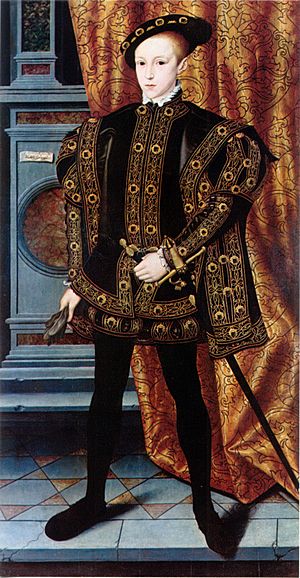


This angered the Protestants, who rose up against her and, on this very day in 1567, forced her to abdicate in favor of her son, who was immediately crowned James VI.
She later escaped, raised an army, and was promptly defeated. She became a guest (or, in English, prisoner) of Queen Elizabeth I until she was caught writing letters asking her friends to support (or, in Scottish, kill) the English Queen.
She was therefore beheaded and remains dead to this day.
(This will be on the test.)
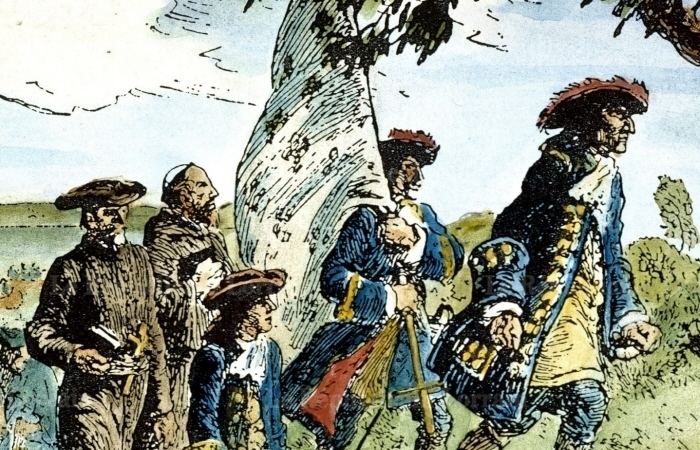
325 years ago today, Antoine de la Mothe Cadillac founded a trading post at Fort Ponchartrain for France on the future site of the city of Detroit, Michigan, in an attempt to halt the advance of the English into the western Great Lakes region.
July 24, 1883 -
Captain Matthew Webb wasn't having a great day today. Webb, the first person to swim the English Channel in 1875, was attempting to swim across the Niagara River just below the falls.
The Captain was looking to collect a £12,000.00 fortune, when he jumped from his small boat into the raging torrent. He hit his head on jagged rocks and drowned while trying to swim across the Niagara River. His last words were (apparently,) "If I die, they will do something for my wife?"
July 24, 1908 –
Sometimes, it's good to be the king ... you get to decide the length of the Olympic marathon.


The race had a thrilling conclusion—entering the stadium first was Italy's Dorando Pietri. But he was exhausted and delirious. He turned the wrong way on the track, reversed course, and stumbled, according to news accounts, five times during the final quarter-mile. By helping Pietri back to his feet, race officials inadvertently cost him the gold medal. But as the official Olympic report explained, "It was impossible to leave him there, for it looked as if he might die in the very presence of the Queen."
Pietri reached the tape first, collapsed, and was placed on a stretcher. Arriving second was John Hayes of the United States. The Americans protested the assistance given to Pietri, and Hayes was declared the winner.
Though he was disqualified, Pietri became a hero. Queen Alexandra presented him with a silver cup. He inspired an international marathon craze. Irving Berlin even wrote a song about him. Finally, in 1921, the official marathon distance was standardized at 26 miles and 385 yards.
So now you know.
July 24, 1915 -
Almost 850 Western Electric employees and their family members perish when the chartered steamer SS Eastland rolled over in Chicago harbor on this date. History blames the top-heaviness of the ship, exacerbated (ironically) by the recent addition of lifeboats.
Moral: Avoid company picnics.
July 24, 1959 -
While visiting a model kitchen in a U.S. exhibition in Moscow, Vice President Richard M. Nixon debated with Soviet leader Nikita Khrushchev at a U.S. exhibition in the famous 'Kitchen' debate, on the merits of capitalism and communism
Nixon correctly said that the $100-a-month mortgage for the model ranch house was well within the reach of a typical American steelworker.
(Stop dreaming about a $100-a-month mortgage.)
Before you go - not to bum you out but, Autumn, will begin in 60 days.
Soon enough the days will grow shorter and we still may never read the Epstein files.
And so it goes.

No comments:
Post a Comment