Famous writers drank mint juleps and wrote them into their works. William Faulkner and Ernest Hemingway partook of the libations, and they are mentioned in F. Scott Fitzgerald's The Great Gatsby, Margaret Mitchell's Gone With the Wind, and Hunter S. Thompson's The Kentucky Derby is Decadent and Depraved. The classic mint julep as made in Kentucky, starts with a chilled silver mug or goblet filled with crushed ice. Dissolve 1 lump of sugar in a little water, fill mug with bourbon, add the dissolved sugar and stir well. Place 4 or 5 sprigs of fresh mint down into the ice. Whatever the reason, make yourself a tall frosty one and celebrate the start of the summer season.
May 30, 1939 -
John Ford's bio pix of President Abraham Lincoln, Young Mr. Lincoln starring Henry Fonda, Alice Brady, Marjorie Weaver, and Arleen Whelan, premiered in Springfield, Illinois on this date.
Henry Fonda originally turned down the role of Lincoln, saying he didn't think he could play such a great man. He changed his mind after John Ford asked him to do a screen test in full makeup. After viewing himself as Lincoln in the test footage, Fonda liked what he saw, and accepted the part. He later told an interviewer, "I felt as if I were portraying Christ himself on film."
May 30, 1956 -
RKO Radio Pictures released Fritz Lang's late period film-noir classic, While The City Sleeps, starring Dana Andrews, Vincent Price and Ida Lupino (with whom you don't fuck with) premiered on this date.
According to Film Noir historian Eddie Mueller in the commentary for Where the Sidewalk Ends, Dana Andrews was drunk during the entire production of this movie. (It was already established, by Andrews himself, that he was an alcoholic during the 1950s.) Ironically, his character is drunk throughout half the film.
May 30, 1964 -
The Beatles first single, of their own material, Love Me Do, (the B side was P.S., I Love You,) released in England in 1962, hit # 1 on the Billboard 100 in the US on this date.
The Beatles recorded versions of this song with three different drummers. At their first Parlophone audition in June 1962, Pete Best was still their drummer. When they recorded it on September 4, Ringo was their drummer, but when George Martin decided it would be the single, he had them record it again a week later.
At this session, he used a session drummer named Andy White and stuck Ringo with the tambourine. The version with Ringo drumming was released as the single, but the version released on the album had Andy White's drumming. Ringo didn't pitch a fit when he got bumped at the session, but was very upset and felt real insecure, especially since The Beatles had just fired a drummer.
May 30, 1973 -
George Harrison's second post-Beatles album (his fourth solo album,) Living In The Material World was released on this date.
The album reaches No. 1 on the Billboard charts and the single Give Me Love (Give Me Peace On Earth), off the album, also hits the top spot. Publishing royalties from that song and others on the album go to Harrison's Material World Charitable Foundation.
May 30, 1980 -
Peter Gabriel released his third solo studio album, which is self-titled, on this date. It features the songs, Games Without Frontiers, Biko, and I Don’t Remember.
The album is sometimes referred to as Melt, owing to its cover photograph by Hipgnosis. Some music streaming services refer to it as Peter Gabriel 3: Melt.
May 30, 2003 -
The Academy Awarding Pixar Animation Studios and Walt Disney Pictures film, Finding Nemo, voiced by Albert Brooks, Ellen DeGeneres, Alexander Gould, and Willem Dafoe, premiered on this date.
Andrew Stanton pitched his idea and story to Pixar head John Lasseter in an hour-long session, using elaborate visual aids and character voices. At the end of it, an exhausted Stanton asked Lasseter what he thought, to which Lasseter replied, "You had me at 'fish.'"
Another unimportant moment in history.
Today in History:
May 30, 1431 -
Convicted of heresy by the English (see May 23), 19-year-old Joan of Arc got an extreme hot foot as her punishment in Rouen, France, on this date.
Pope Benedict XV canonized her in 1920.
May 30, 1593 -
Noted English dramatist, spy and buggerer (a famed pastime of English and Irish playwrights), Christopher Marlowe was either:
a: murdered in a tavern brawl on this date, or,
b: faked his death and assumed a new identity as William Shakespeare, noted English dramatist, spy and buggerer.
May 30, 1806 -
Andrew Jackson couldn't wait to marry his wife, Rachel Donelson Robards.
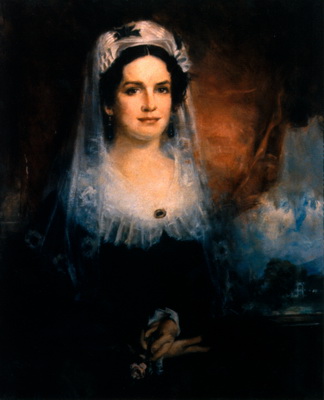
The slug shatters two ribs and buries itself near his heart. Then it was Jackson's turn to fire; his shot managed to sever an artery, technically breaking the rules of the duel. Dickinson died a few hours later, the only man Jackson ever killed in any of his 103 duels.
The bullet that struck Jackson was so close to his heart that it could never be safely removed. Jackson had been wounded so frequently in duels over his wife's honor that it was said he "rattled like a bag of marbles". At times he would cough up blood, and he experienced considerable pain from his wounds for the rest of his life.
I suppose that's what love was like in the 19th Century.
May 30, 1842 –
The semi-annual event, Kill the Queen Day takes place, on this date, when John Francis fails in an attempt to assassinate Queen Victoria as she drives down Constitution Hill in London with Prince Albert. This was actually Francis’s second attempt; the day before, he had pulled out his pistol but had either lost courage or his gun had misfired; he slipped away.

On May 30, 1889, the world’s first bra was (allegedly) invented.
Breasts are an essential feature among mammals, allowing mothers to nurture their young during protracted infancies. No infancy is longer than that of the human species - particularly that of the American male, which often lasts until death.
Breasts, of course, are not just mobile diners for infants. On humans, at least, they also have significant recreational value. Nothing else quite matches the nutrition, entertainment, and sheer jiggle value of the human breast (though Jell-O™ comes close).
Naturally, men couldn’t leave something with the power, appeal, and nutritive value of breasts entirely in the hands of women—literally or metaphorically. From the very dawn of human history, therefore, breasts have been in men’s hands.
In 2500 BC, the Minoan women of Crete were said to have worn special garments that lifted their breasts completely out of their clothing. (Like another popular story of ancient Minos, this is believed to be half bull.) By the rise of the Hellenic (Greek) and Roman civilizations, however, women were binding their breasts tightly to reduce their busts. This style persisted until 476 AD, which historians rightly call the Fall of Rome.

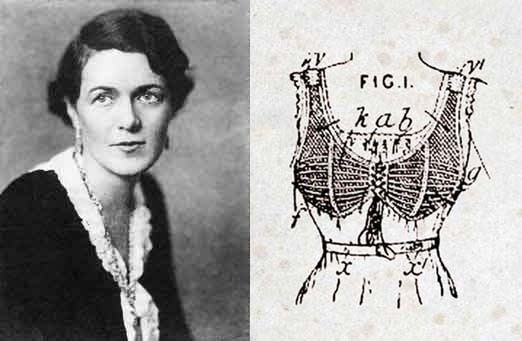

In 1914, New York socialite Mary Jacob Phelps crafted a modern bra using two handkerchiefs, some ribbon, and a bit of cord to wear under a sheer evening gown. She sold her invention—the brassiere—to the Warner Brothers Corset Company in Bridgeport, Connecticut, for $1,500.
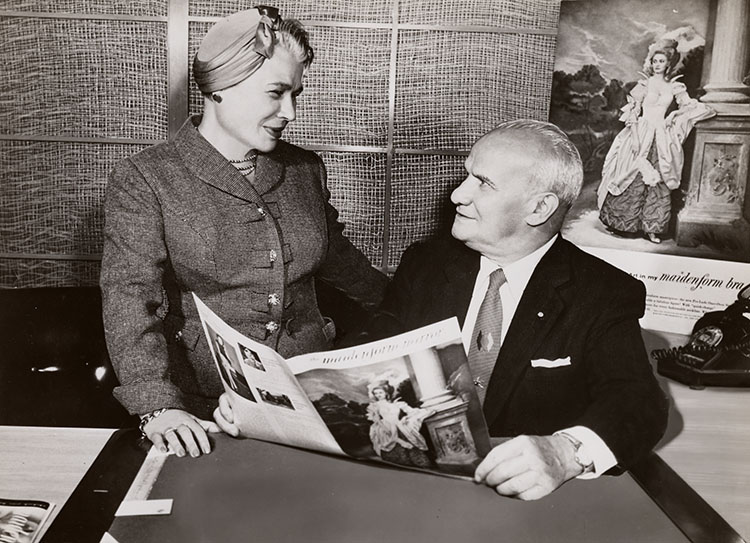
From then on, the bra was here to stay—lifting, separating, supporting, and (in some cases) liberating breasts across the globe. So you see Bunkies, it doesn’t really matter what happened on May 30, 1889. It only matters that I’ve gotten you to read the word breast about twenty times in the last several paragraphs.
Now you know.
May 30, 1896 -
The first car accident in the United States happened in New York City on this date.

May 30, 1906 -
Chocolate tycoon Milton Hersey opened Hersheypark which he built as a leisure park for his employees, on this date.
Over the years, a Merry-go-Round and boat rides on the creek that ran through the park were added, but It wasn’t until 1923 that the first roller coaster was built, The Wild Cat. Over the next 70 years, nine roller coasters were added, a water park, themed areas, a zoo, and other attractions.
May 30, 1908 -

He is often regarded as one of the most gifted and influential persons in his field, providing the definitive voices for iconic characters such as Bugs Bunny, Daffy Duck, Porky Pig and Barney Rubble among hundreds of others. His talents earned him the nickname, The Man of a Thousand Voices. When he died he had "That's All Folks" inscribed on his tombstone.
May 30, 1922 -
The Lincoln Memorial was dedicated on this date.
The Memorial walls feature a typo. The north wall of the monument building features an inscription of Abraham Lincoln’s second inaugural address, a speech originally delivered in March 1865 at the tail end of the Civil War. Lincoln’s memorable incantation, “With high hope for the future, no prediction in regard to it is ventured,” concludes the first paragraph of the inscription, though with a minor error: The word “FUTURE” is misspelled as “EUTURE,” a blunder that remains visible despite attempts to correct it.
May 30, 1966 -
Surveyor 1, the first US spacecraft to land on an extraterrestrial body (the Moon), was launched from Cape Canaveral, on this date.
The hovercraft successful soft landed in the Ocean of Storms on the Moon on June 2, 1966. Surveyor 1 transmitted 11,237 still photos of the lunar surface to the Earth by using a television camera and a sophisticated radio-telemetry system.
May 30, 1971 -
The US space probe Mariner 9, the first satellite to orbit Mars, was launched on this date.
Over the years, it will send more than 7,000 pictures of the planet back to Earth.The images revealed what appear to be ancient dry riverbeds on the surface, suggesting the presence of water on Mars at some point in the past. Mariner 9 photographed the entire surface of Mars.
May 30, 1989 -
Chinese students erected a giant statue called "The Goddess of Democracy" in Tiananmen Square on this date.
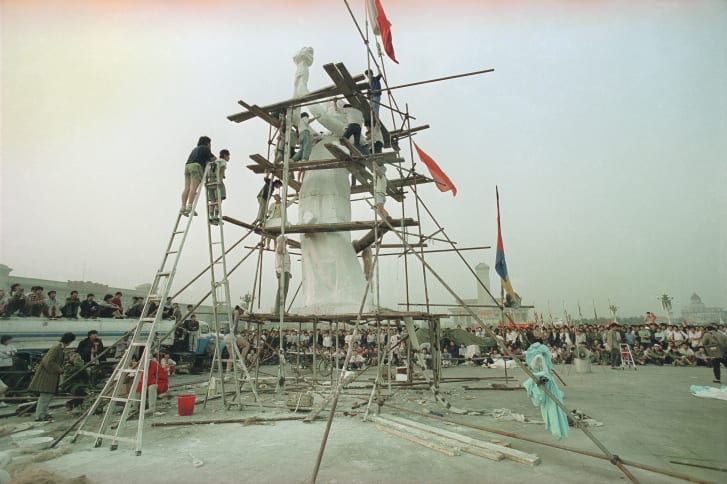
(Once again, I'm not winning any fans in China.)
And so it goes.

No comments:
Post a Comment