Saturday, May 31, 2025

I don't know where you are -

it's raining like cats and dogs where I am at the moment.

(I'm visiting my brother before we gather at a secret location for a rare conclave of The Caligari's. What nefarious plot are we hatching, I can not say., but that's another story ...)


World No Tobacco Day is observed around the world every year on May 31. The member states of the World Health Organization created World No Tobacco Day in 1987. It draws global attention to the tobacco epidemic and to the preventable death and disease it causes.


It aims to reduce the 3.5 million yearly deaths from tobacco related health problems. Since 1988 the WHO has presented one or more World No Tobacco Day (WNTD) Awards to organizations or individuals who have made exceptional contributions to reducing tobacco consumption.


May 31, 1975 -
The first single from the Isley Brothers hit album, The Heat Is On, Fight the Power, was released on this date. (The song is notable for the use of the word bullshit, which is usually censored during radio airplay.)


Often thought of as a song about the black experience, Fight The Power is more of a general statement on rising above the powers that be. The youngest Isley Brother, Marvin, explained in a 1976 interview with Blues & Soul: "We don't close ourselves away like some entertainers do – we listen to the radio, read the newspapers and generally get into what's happening out there in an attempt to reflect the world as it is. With The Heat Is On, we wanted to be as funky as possible musically, and yet for the lyrics to say something unusual. 'Fight The Power'? Well, we decided not to be passive, to take a stand. And we met hardly any resistance because that power could be anything – we all have our different conceptions of what it is to each of us. And just letting it out – about the bullshit that does go down – is something that everyone wants to do."


May 31, 1976 -
Tom Waits begins a two-week stint performing at Ronnie Scott's Club in Soho, London, England, run by Pete King, on this date.


The experience inspired Waits to write The Piano Has Been Drinking (Not Me)(An Evening with Pete King). Waits recorded this song, along with the rest of the album, Small Change, a month after this stint was complete.


May 31, 1976 -
Ten years after it appeared on The Beatles' Revolver album, Capitol Records issues Got To Get You Into My Life as a single on this date.


A British rock group called Cliff Bennett & The Rebel Rousers released this song as a single around the same time it appeared on The Beatles Revolver album. Bennett & The Rebel Rousers were an opening act for The Beatles on their European tour in early 1966; since there were no plans to release Got To Get You Into My Life as a single, Paul McCartney encouraged them to record it and produced the session. Earth, Wind & Fire recorded a funky new version for the 1978 movie Sgt. Pepper's Lonely Hearts Club Band. Beatles producer George Martin was in charge of the music, and the soundtrack was a success, but the movie, which starred Peter Frampton, The Bee Gees and Aerosmith, was a huge flop. Earth, Wind & Fire's version of this hit #9 in the US.


May 31, 1980 -
Casablanca Records released the Lipps Inc./ Steven Greenberg song, Funkytown, on this date.


Lipps Inc. (pronounced "Lip Synch") was formed especially for this song. The vocals were by Cynthia Johnson, who was Miss Black Minnesota 1976. The group continued to record until 1985 with a changing lineup, but they failed to see the success they'd had with their first hit.


May 31, 1983 -
After a break in which David Byrne and Jerry Harrison release solo albums and Chris Frantz and Tina Weymouth form Tom Tom Club, Talking Heads return with their fifth album, Speaking In Tongues.


It contains their biggest hit, Burning Down The House. Talking Heads drummer Chris Frantz and bass player Tina Weymouth, married since 1977, are big fans of funk. When they went to a P-Funk show at Madison Square Garden in New York City, the crowd started chanting, "Burn down the house, burn down the house" (this is before The Roof Is on Fire), which gave Frantz the idea for the title.


The first Seinfeld episode (referred to as episode #2 The Stakeout) created by Larry David and Jerry Seinfeld premiered on Thursday, May 31, 1990 on NBC-TV. The show often described as "about nothing" was not an immediate success.


After the pilot was shown, on July 5, 1989, a pickup by the NBC network did not seem likely and the show was actually offered to Fox, which declined to pick it up. However, Rick Ludwin, head of late night and special events for NBC, diverted money from his budget, and the next four episodes were filmed.

I wonder what ever happened to those guys?


May 31, 1992 -
The last episode of the original series, Night Court: The 1992 Boat Show aired on NBC-TV, on this date.


This episode was actually aired out of order. The two parter, Opportunity Knocks, which aired before this episode, was the finale of the series. This episode never aired on its original air date and was held over to the end of the season confusingly airing after the series finale.


May 31, 1999 -
The VH1 documentary series Behind the Music began airing nightly with their premiere episode The Red Hot Chili Peppers: Behind the Music.


Anthony Kiedis and Flea (bass guitar) first met when they were both 15 and attending high school together. (20 years after the program, the band is still going strong.)


Don't forget to tune in to The ACME Eagle Hand Soap Radio Hour today


Today in History:
May 31, 455 -
Petronius Maximus, emperor for less than three month, was having an extremely bad day. News reached Rome that Vandals were planning on sacking Rome (besides vigorous bouts of sodomy; sacking was the favorite pastime for Vandals.) The level headed Petronius attempted to organize an orderly evacuation of the Senate and his cronies. Panic, unfortunately set in and Petronius Maximus was completely abandoned by his bodyguard and entourage and was left to fend for himself.


As he rode out of the city on his own, he was set upon by an angry mob who stoned him to death. His body was mutilated and flung into the Tiber.

Sometimes, it isn't every worth getting out of bed, even if you're the ruler of all the known world.


May 31, 1678 -
The lovely young Lady Godiva, aged 17, rode naked on horseback through Coventry, England, to protest the high tax rate established by her own husband, Earl Leofric of Mercia. Her protest worked and he lowered taxes.


While I can't say whether or not the MAGA crowd strongly endorse this type of civil disobedience, I'd like to remind the ladies out there that taxes are pretty damn high just about everywhere these days.


May 31, 1819 -
There is no week nor day nor hour when tyranny may not enter upon this country, if the people lose their roughness and spirit of defiance.


A great New Yorker and even greater poet, Walt Whitman was born on this date.


May 31, 1859 -
The iconic clock in the clock tower attached to the Palace at Westminister first began to keep time on this date.


The name Big Ben is often used to describe the tower or the clock but it's actually is the name of the carillon inside. The tower itself was formally known as St. Stephen’s Tower until 2012, when it was renamed Elizabeth Tower on the occasion of Elizabeth II’s Diamond Jubilee, celebrating 60 years on the British throne. Unfortunately, because of the pandemic, the work which had been scheduled to end at the end of this year, now stretches into 2022.


May 30, 1879 -
The Gilmore's Garden in New York City is renamed Madison Square Garden by William Henry Vanderbilt and opens to the public at 26th Street and Madison Avenue.


Originally it was a railroad passenger depot located at East 26th Street and Madison Avenue, the New York and Harlem Railroad, before they would move in 1871. Then, with tented roof, it would become P.T. Barnum's Great Roman Hippodrome. In 1876, the theatre became Gilmore's Garden, after Patrick Gilmore, a band leader. The building under his name housed flower shows, pedestrian marathons, the first Westminster Kennel Club Show in 1877, beauty contests, and concerts. Owned by the Vanderbilt family, William renamed it Madison Square Garden in 1879, continuing to present a variety of shows; boxing, track and field, and Barnum back with the elephant Jumbo. The first building had a capacity of ten thousand and was open-air.


May 31, 1889 -
Relentless rain and inadequate maintenance causes the South Fork Dam to fail, unleashing a 35-foot-high wall of water on Johnstown, Pennsylvania.


The wall of flood water grew at times to 60 feet high, tearing downhill at 40 miles per hour, leveling everything in its path and killing 2,209 people.


May 31, 1895 -
Dr. John Harvey Kellogg, head of the Battle Creek Sanitarium, patented corn flakes on this date. The good doctor believed in a vegetarian diet and a regimen of exercise. The good doctor also believed in proper elimination. At his sanitarium, Kellogg made sure that the bowel of each and every patient was plied with water, from above and below. His favorite device was an enema machine that could run 15 gallons of cold water through an unfortunate bowel in a matter of seconds.


Every water enema was followed by a pint of yogurt — half was eaten, the other half was administered by enema “thus planting the protective germs where they are most needed and may render most effective service”. The yogurt served to replace the intestinal flora of the bowel, creating what Kellogg claimed was a squeaky clean intestine.


Bet you'll never look at a carton of yogurt the same way again.


May 31, 1902 -
The Treaty of Vereeniging was signed on this date, canceling the Bore War for lack of interest.


(The Bore War should not be confused with the Boar War, which was much more exciting on account of tusks.)


May 21, 1921 -
Following an accusation of improper conduct between Dick Rowland, a black shoeshiner and Sarah Page, a white elevator operator, hundreds of white people gather and start to form what looks like a lynch mob which ends with the traditionally black district of Greenwood in Tulsa, Oklahoma being burnt to the ground with many black citizens choose or were forced to relocate after the riot which ended on June 1st 1921 after the National Guard troops from Oklahoma City declare martial law.


As many as 10,000 white men and boys attacked the black community and 35 blocks of the black business district were burned with participation by police officers and a local unit of the National Guard. Some 200-300 people were believed to have been killed. In 2000 the Tulsa Race Riot Commission recommended that reparations be paid to survivors of the riots and their descendants.


May 31, 1957 -
The House for Un-American Activities Committee (HUAC) convicts the playwright Arthur Miller of contempt of Congress, on this date.


He had refused to answer two questions at a hearing before the committee:

1. "Can you tell us who were there when you walked into the room?"
2. "Was Arnaud D'Usseau chairman of the meeting of the Communist party writers which took place in 1947 at which you were in attendance?"

Although he testified frankly about his own relationships with persons of Communist bent or membership, he said that his conscience had forbidden him to tell about others.


May 31, 1963 -
Nun Nu Thanh Quang, a Buddhist monk, immolated himself on this date at the Dieu de Pagoda in Hue, Vietnam.

That has got to hurt.


May 31, 1969 -
The National Legume Collective negotiated intensely all through the early part of 1969 with John Lennon and his new wife, Yoko Ono to record their new promotional song, Give Peas a Chance. The agreement ends abruptly when the organization actually heard Ms. Ono's voice.


John Lennon and Yoko Ono then decide not to waste the experience and record Give Peace a Chance, the first single recorded by a solo Beatle, from their hotel bed (not as a political statement as some have argued but because of the bloated feeling from eating a non-stop diet of peas for the past five months).


May 31, 1996 -
Timothy Leary died quietly in his sleep on this date, thereby failing his intended mission of killing himself live on the Internet.


On a brighter note, a longstanding Moody Blues prophecy was fulfilled.


Before you go - I would be remiss if I didn't remember to wish one of our bunkies a very Happy Birthday!

Hope you've enjoyed your Birthday Jim


And so it goes.

Friday, May 30, 2025

For some reason it's National Mint Julep Day

You would be forgiven if you were slightly confused - The Kentucky Derby would seem like a perfectly fine day to honor this drink. Perhaps gamblers finally sobered up after their losses that day and decided to celebrate the beverage. The American word 'julep' can be traced to French julep, which comes from the Arabic julab, which is from the Persian julab, meaning 'rose water.' The drink as we know it today is an American invention. Maybe you need one after having to follow along.


Famous writers drank mint juleps and wrote them into their works. William Faulkner and Ernest Hemingway partook of the libations, and they are mentioned in F. Scott Fitzgerald's The Great Gatsby, Margaret Mitchell's Gone With the Wind, and Hunter S. Thompson's The Kentucky Derby is Decadent and Depraved. The classic mint julep as made in Kentucky, starts with a chilled silver mug or goblet filled with crushed ice. Dissolve 1 lump of sugar in a little water, fill mug with bourbon, add the dissolved sugar and stir well. Place 4 or 5 sprigs of fresh mint down into the ice. Whatever the reason, make yourself a tall frosty one and celebrate the start of the summer season.


May 30, 1939 -
John Ford's bio pix of President Abraham Lincoln, Young Mr. Lincoln starring Henry Fonda, Alice Brady, Marjorie Weaver, and Arleen Whelan, premiered in Springfield, Illinois on this date.


Henry Fonda originally turned down the role of Lincoln, saying he didn't think he could play such a great man. He changed his mind after John Ford asked him to do a screen test in full makeup. After viewing himself as Lincoln in the test footage, Fonda liked what he saw, and accepted the part. He later told an interviewer, "I felt as if I were portraying Christ himself on film."


May 30, 1956 -
RKO Radio Pictures released Fritz Lang's late period film-noir classic, While The City Sleeps, starring Dana Andrews, Vincent Price and Ida Lupino (with whom you don't fuck with) premiered on this date.


According to Film Noir historian Eddie Mueller in the commentary for Where the Sidewalk Ends, Dana Andrews was drunk during the entire production of this movie. (It was already established, by Andrews himself, that he was an alcoholic during the 1950s.) Ironically, his character is drunk throughout half the film.


May 30, 1964 -
The Beatles first single, of their own material, Love Me Do, (the B side was P.S., I Love You,) released in England in 1962, hit # 1 on the Billboard 100 in the US on this date.


The Beatles recorded versions of this song with three different drummers. At their first Parlophone audition in June 1962, Pete Best was still their drummer. When they recorded it on September 4, Ringo was their drummer, but when George Martin decided it would be the single, he had them record it again a week later.


At this session, he used a session drummer named Andy White and stuck Ringo with the tambourine. The version with Ringo drumming was released as the single, but the version released on the album had Andy White's drumming. Ringo didn't pitch a fit when he got bumped at the session, but was very upset and felt real insecure, especially since The Beatles had just fired a drummer.


May 30, 1973 -
George Harrison's second post-Beatles album (his fourth solo album,) Living In The Material World was released on this date.


The album reaches No. 1 on the Billboard charts and the single Give Me Love (Give Me Peace On Earth), off the album, also hits the top spot. Publishing royalties from that song and others on the album go to Harrison's Material World Charitable Foundation.


May 30, 1980 -
Peter Gabriel released his third solo studio album, which is self-titled, on this date. It features the songs, Games Without Frontiers, Biko, and I Don’t Remember.


The album is sometimes referred to as Melt, owing to its cover photograph by Hipgnosis. Some music streaming services refer to it as Peter Gabriel 3: Melt.


May 30, 2003 -
The Academy Awarding Pixar Animation Studios and Walt Disney Pictures film, Finding Nemo, voiced by Albert Brooks, Ellen DeGeneres, Alexander Gould, and Willem Dafoe, premiered on this date.


Andrew Stanton pitched his idea and story to Pixar head John Lasseter in an hour-long session, using elaborate visual aids and character voices. At the end of it, an exhausted Stanton asked Lasseter what he thought, to which Lasseter replied, "You had me at 'fish.'"


Another unimportant moment in history.


Today in History:
May 30, 1431 -
Convicted of heresy by the English (see May 23), 19-year-old Joan of Arc got an extreme hot foot as her punishment in Rouen, France, on this date.


Pope Benedict XV canonized her in 1920.


May 30, 1593 -
Noted English dramatist, spy and buggerer (a famed pastime of English and Irish playwrights), Christopher Marlowe was either:


a: murdered in a tavern brawl on this date, or,
b: faked his death and assumed a new identity as William Shakespeare, noted English dramatist, spy and buggerer.


May 30, 1806 -
Andrew Jackson couldn't wait to marry his wife, Rachel Donelson Robards.

He was so impatient that he had married her before she could obtain a legal divorce from her first husband, Captain Lewis Robards - so technically she was a bigamist and an adulteress. His political opponents made much of this fact. Dueling over a horse racing wager and his wife's honor, the future President took a bullet in the chest from fellow lawyer Charles Dickinson on this date in 1806.


The slug shatters two ribs and buries itself near his heart. Then it was Jackson's turn to fire; his shot managed to sever an artery, technically breaking the rules of the duel. Dickinson died a few hours later, the only man Jackson ever killed in any of his 103 duels.

The bullet that struck Jackson was so close to his heart that it could never be safely removed. Jackson had been wounded so frequently in duels over his wife's honor that it was said he "rattled like a bag of marbles". At times he would cough up blood, and he experienced considerable pain from his wounds for the rest of his life.

I suppose that's what love was like in the 19th Century.


May 30, 1842
The semi-annual event, Kill the Queen Day takes place, on this date, when John Francis fails in an attempt to assassinate Queen Victoria as she drives down Constitution Hill in London with Prince Albert. This was actually Francis’s second attempt; the day before, he had pulled out his pistol but had either lost courage or his gun had misfired; he slipped away.

John Francis, 19 at the time, was the only one of Victoria’s assailants to be found guilty of treason and sentenced to death. His sentence was, however, commuted to transportation for life. He lived the rest of his 63 years in Australia, marrying and fathering ten children. He died in 1885. Many of his descendants live on.


On May 30, 1889, the world’s first bra was (allegedly) invented.


Breasts are an essential feature among mammals, allowing mothers to nurture their young during protracted infancies. No infancy is longer than that of the human species - particularly that of the American male, which often lasts until death.


Breasts, of course, are not just mobile diners for infants. On humans, at least, they also have significant recreational value. Nothing else quite matches the nutrition, entertainment, and sheer jiggle value of the human breast (though Jell-O™ comes close).


Naturally, men couldn’t leave something with the power, appeal, and nutritive value of breasts entirely in the hands of women—literally or metaphorically. From the very dawn of human history, therefore, breasts have been in men’s hands.


In 2500 BC, the Minoan women of Crete were said to have worn special garments that lifted their breasts completely out of their clothing. (Like another popular story of ancient Minos, this is believed to be half bull.) By the rise of the Hellenic (Greek) and Roman civilizations, however, women were binding their breasts tightly to reduce their busts. This style persisted until 476 AD, which historians rightly call the Fall of Rome.

As history progressed, the popularity of breasts rose and fell—heaved and plunged, lifted and separated. Each new culture found its own way of exalting or obscuring the breast. By the nineteenth century in Europe, breasts were being pressed together and thrust upward by whalebone-fortified corsets. The strain was unbearable. Something had to give.

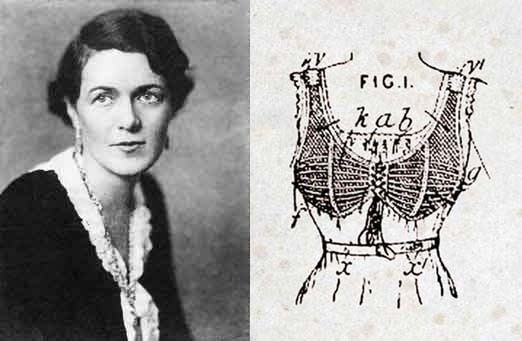
On May 30, 1889, the world’s first bra was invented. Or so the story goes—I’ve lost all track of where I first found that date. However, I do know that corset maker Herminie Cadolle invented the Bien-ĂȘtre (meaning "well-being") in 1889, a garment that supported the breasts from the shoulder down instead of squeezing them up from below. A revolution, indeed.

Marie Tucek patented the first “breast supporter” in 1893—a design featuring separate pockets for the breasts, with shoulder straps and hook-and-eye closures. Yes, the very first over-the-shoulder boulder holder.


In 1914, New York socialite Mary Jacob Phelps crafted a modern bra using two handkerchiefs, some ribbon, and a bit of cord to wear under a sheer evening gown. She sold her invention—the brassiere—to the Warner Brothers Corset Company in Bridgeport, Connecticut, for $1,500.

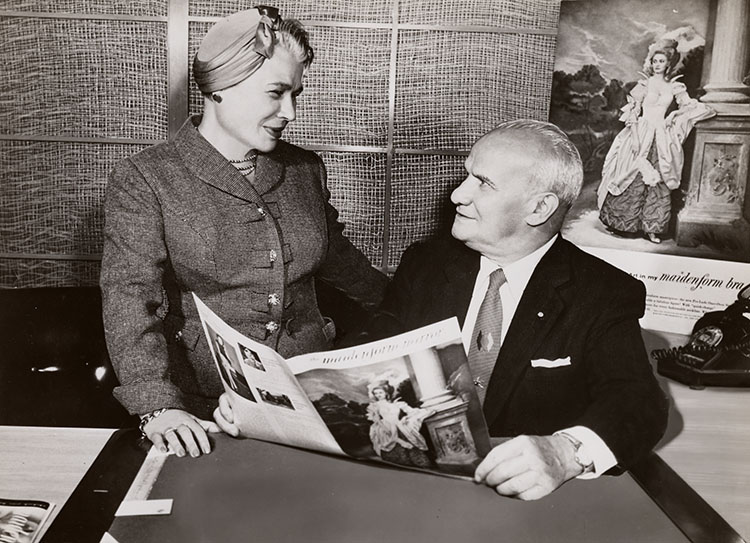
World War I gave the bra an extra boost. The U.S. War Industries Board encouraged women to stop buying corsets in 1917, freeing up nearly 60 million pounds of the metal used in them—enough to gird a lot of loins. In the 1920s, Russian immigrant Ida Rosenthal and her husband William founded Maidenform, grouping breasts into cup sizes and designing bras for women of all ages.


From then on, the bra was here to stay—lifting, separating, supporting, and (in some cases) liberating breasts across the globe. So you see Bunkies, it doesn’t really matter what happened on May 30, 1889. It only matters that I’ve gotten you to read the word breast about twenty times in the last several paragraphs.

Now you know.


May 30, 1896 -
The first car accident in the United States happened in New York City on this date.

Henry Wells from Springfield, Massachusetts was out joy riding his Duryea Motor Wagon, careening along the streets at 18 mph, when he collided with with a bicycle ridden by Evylyn Thomas, New York native. She was brought to Manhattan Hospital with a broken leg.


May 30, 1906 -
Chocolate tycoon Milton Hersey opened Hersheypark which he built as a leisure park for his employees, on this date.


Over the years, a Merry-go-Round and boat rides on the creek that ran through the park were added, but It wasn’t until 1923 that the first roller coaster was built, The Wild Cat. Over the next 70 years, nine roller coasters were added, a water park, themed areas, a zoo, and other attractions.


May 30, 1908 -

Melvin Jerome Blanc, the prolific American voice actor, performing on radio, in television commercials, and most famously, in hundreds of cartoon shorts for Warner Bros. and Hanna-Barbera during the Golden Age of American animation, was born on this date.


He is often regarded as one of the most gifted and influential persons in his field, providing the definitive voices for iconic characters such as Bugs Bunny, Daffy Duck, Porky Pig and Barney Rubble among hundreds of others. His talents earned him the nickname, The Man of a Thousand Voices. When he died he had "That's All Folks" inscribed on his tombstone.


May 30, 1922 -
The Lincoln Memorial was dedicated on this date.


The Memorial walls feature a typo. The north wall of the monument building features an inscription of Abraham Lincoln’s second inaugural address, a speech originally delivered in March 1865 at the tail end of the Civil War. Lincoln’s memorable incantation, “With high hope for the future, no prediction in regard to it is ventured,” concludes the first paragraph of the inscription, though with a minor error: The word “FUTURE” is misspelled as “EUTURE,” a blunder that remains visible despite attempts to correct it.


May 30, 1966 -
Surveyor 1, the first US spacecraft to land on an extraterrestrial body (the Moon), was launched from Cape Canaveral, on this date.


The hovercraft successful soft landed in the Ocean of Storms on the Moon on June 2, 1966. Surveyor 1 transmitted 11,237 still photos of the lunar surface to the Earth by using a television camera and a sophisticated radio-telemetry system.


May 30, 1971 -
The US space probe Mariner 9, the first satellite to orbit Mars, was launched on this date.


Over the years, it will send more than 7,000 pictures of the planet back to Earth.The images revealed what appear to be ancient dry riverbeds on the surface, suggesting the presence of water on Mars at some point in the past. Mariner 9 photographed the entire surface of Mars.


May 30, 1989 -
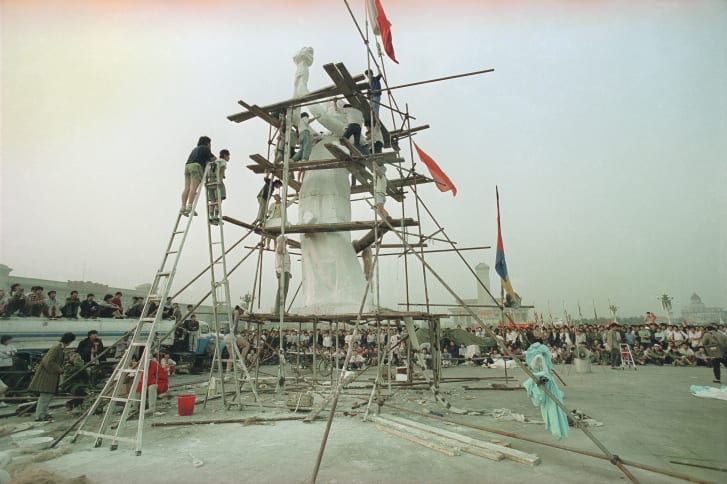
Chinese students erected a giant statue called "The Goddess of Democracy" in Tiananmen Square on this date.

The statue was put up as part of the ongoing student protests in Tiananmen Square, and was brought down by tanks just five days later.

(Once again, I'm not winning any fans in China.)


And so it goes.

Thursday, May 29, 2025

You have a better shot today

If you didn't get a chance to catch the sunset last night, don't worry -

Manhattanhenge happens again tonight at 8:12 pm EDT, (It might be cloudy though,) and then again on July 11 and 12.


Ok bunkies, I'm not going to lie to you, this is a tough one to understand. The old ladies in the back of church, dutifully saying their decades of rosaries, will explain it to you but you'll either get it or not. Today is Ascension Thursday. 40 days after Jesus rose from the death on Easter Sunday, his corporal body ascends into Heaven. 10 days later, his (the Holy Spirit) spirit comes back for a visit on Pentecost Sunday.


While Springsteen is right, It's hard to be a saint in the city - it's damned near impossible to understand theological canon. And yes, it is a Holy Day of Obligation. How you deal that that piece of information is between you and your god.


May 29, 1936 -
Fritz Lang's crime thriller, Fury, starring Sylvia Sidney and Spencer Tracy, opened on this date.


Fritz Lang was the first filmmaker to use newsreel footage as a courtroom device in a motion picture, and may have done so before it was used in an actual court case.


May 29, 1942 -
The movie Yankee Doodle Dandy, starring James Cagney, premiered at a war-bonds benefit in New York on this date.


Many facts were changed or ignored to add to the feel of the movie. For example, the real George M. Cohan was married twice, and although his second wife's middle name was Mary, she went by her first name, Agnes. In fact, the movie deviated from the truth to such a degree that Cohan's daughter Georgette commented, "That's the kind of life Daddy would have liked to have lived."


May 29, 1954 -
During the first 3-D craze of the 50s, Alfred Hitchcock releases his masterpiece, Dial 'M' for Murder, on this date.


Warner Bros. insisted on shooting the movie in 3-D, although the craze was fading and Alfred Hitchcock was sure the movie would be released flat. Hitchcock wanted the first shot to be that of a close-up of a finger dialing the letter M on a rotary dial telephone, but the 3-D camera would not be able to focus such a close-up correctly. Hitchcock ordered a giant finger made from wood with a proportionally large dial built in order to achieve the effect.


May 29, 1957 -
Try to follow along - On November 3, 1954, Japan released Gojira (Godzilla), the greatest fever dream and anti nuclear proliferation film ever made. On April 26, 1956, an American version of the film, Godzilla, King of the Monsters, was released. It had 40 minutes of the original excised (mostly the content dealing with World War II or the anti-nuclear message,) and had 20 minutes of the masterful deadpan stylings of Raymond Burr.


The American version did so well that Kaiju O Gojira (Godzilla, King of the Monsters) was released in Japan with Japanese subtitles on this date and did very well.


May 29, 1961 -
Ricky Nelson's song, Travelin' Man hits No. 1 on the Billboard Charts on this date.


Depending on the criteria, Travelin' Man could be the song with the very first music video. Ozzie Nelson realized that whenever he had Ricky sing on their show The Adventures Of Ozzie And Harriet, Ricky's record sales shot up the next day, so Ozzie tried to work it into the plot whenever Ricky had a new record out. As Ricky became popular and the demand for his songs was overwhelming, Ozzie realized that working his singing into the plot was going to be impossible, so Ozzie filmed Ricky singing Travelin' Man, superimposed some travelogue scenes over the film and tacked it onto a show episode at the end. Viola! The music video was born.


May 29, 1961 -
Daniel Petrie's film adaptation of Lorraine Hansberry's stage play, A Raisin in the Sun, starring Sidney Poitier, Ruby Dee, John Fiedler, and Ivan Dixon premiered in NYC, on this date.


There was a tense and antagonistic relationship between Sidney Poitier and Claudia McNeil during the making of this film. The tension between the actor and actress had first developed when they played these parts in the play on Broadway. McNeil felt that film should adopt her character's point-of-view, a stance supported by the Playwright Lorraine Hansberry, while Poitier believed his character's struggles should be the focal point of the film. The actor and actress' distaste for one another never quite diminished, and Poitier wrote many years later that he believed that McNeil hated him.


May 29, 1965 -
The Beach Boys single Help Me Rhonda became the No. 1 hit on the Billboard charts, making it their second chart-topping single, on this date.


Daryl Dragon, The Captain from The Captain & Tennille, played organ on this. As was the case with many of Brian Wilson's productions, he also used some of the top Los Angeles session players on the track, including Glen Campbell on guitar, Hal Blaine on drums, and Carol Kaye on bass.


May 29, 1969 -
Crosby, Stills & Nash release their eponymous debut album, on the Atlantic Records label, on this date.


The album had two Top 40 singles, Marrakesh Express and Suite: Judy Blue Eyes, which peaked respectively at No. 28 the week of August 23, 1969, and at No. 21 the week of December 6, 1969, on the US Billboard Hot 100.


May 29, 1984 -
Tina Turner's big comeback album, (her fifth solo studio album,) Private Dancer, was released by Capital Records on this date.


It became a worldwide commercial success, earning multi-platinum certifications, and remains her best-selling album in North America


May 29, 1988 -
The story of Jan Scruggs' effort to build the Vietnam Veterans Memorial, To Heal A Nation, aired on NBC TV, on this date.


Although the role is credited as "Senator Bob Mathias," the character portrayed by Laurence Luckinbill was actually a Republican member of the US House of Representatives representing California for four terms, from January 3, 1967 to January 3, 1975, and never ran (nor was he appointed) for the office of either California State Senator or United States Senator from California (or any other state). The role should have been credited as either Congressman Bob Mathias or Representative Bob Mathias.


May 29, 1995
Pink Floyd released their third live album, a 2-CD album, Pulse, in the U.K., on this date.


Pink Floyd toured in support of their recent album, The Division Bell, for eight months between March and October 1994. The album was the live, double CD document of that tour.


Another ACME Safety Film


Today in History:
May 29, 1453 -
Constantinople was taken by Ottoman Turks on this date, after a fifty day siege led by Sultan Mehmet II. The city defense of 10,000 men was no match for a force of 100,000 armed with heavy artillery.


It is the final gasp of the Eastern Roman (Byzantine) Empire.

Why is this important, you may well ask - it really isn't (this event is considered the end of the Middle Ages) but then again, neither is most of history.


Patrick Henry was born on May 29, 1736. Mr Henry was an American patriot best known for never having been able to make up his mind. Asked the simplest question, Mr Henry found himself befuddled for days. It therefore came as no surprise to anyone who knew him when, given the choice between liberty and death, he famously pronounced that either would be welcome.


History records his vow at St. John's Church in March of 1775 as "Give me liberty or give me death!" Eyewitnesses and other contemporaries claim he actually said, "Liberty, death, whatever, let's just wrap this puppy up."


May 29, 1913 -
Imagine, if you will, you live in Paris and that after a hard day of not working and drinking heavily (it's what most of the idle rich did in Paris at the time, in between bouts of sodomy, while they waited around for Marcel Proust to finish writing that damn book he was working on - but that's another story), you were dragged to the Théùtre des Champs-ÉlysĂ©es in Paris. Tonight, the Ballets Russes was going to perform a new ballet, Le Sacre du Printemps (The Rite of Spring) with the international star, Nijinsky, the choreographer. You might have been expecting a brief snooze but what you got was a full out boxing match (not unlike an evening at the Boston Pops).


The complex music and violent dance steps depicting fertility rites first drew catcalls and whistles from the crowd, and there were loud arguments in the audience between supporters and opponents of the work. These were soon followed by shouts and fistfights in the aisles. The unrest in the audience eventually degenerated into a riot. The Paris police arrived by intermission, but they restored only limited order. Chaos reigned for the remainder of the performance, and Igor Stravinsky (the composer) himself was so upset on account of its reception that he fled the theater in mid-scene, reportedly crying. Fellow composer Camille Saint-Saëns famously stormed out of the premiÚre, (though Stravinsky latter said "I do not know who invented the story that he was present at, but soon walked out of, the premiere.") allegedly infuriated over the misuse of the bassoon in the ballet's opening bars.


I hate when they misuse the bassoon.

Stravinsky ran backstage, where Sergei Diaghliev, was turning the lights on and off in an attempt to try to calm the audience, much like some kind of proto-DJ. Nijinsky stood on a chair, leaned out (far enough that Stravinsky had to grab his coat-tail), and shouted numbers to the dancers, who couldn't hear the orchestra (this was challenging because Russian numbers are polysyllabic above ten, such as eighteen: vosemnadsat). All of this could have been choreographed itself. It's a marvel the show continued at all.


Although Nijinsky and Stravinsky were despondent, Diaghilev (the ballet's impresario) commented that the scandal was "just what I wanted". The music and choreography were considered barbaric and sexual and are also often noted as being the primary factors for the cause of the riot, but many political and social tensions surrounding the premiere contributed to the backlash as well. The Rite of Spring eventually became a cornerstone of 20th-century music. It influenced generations of composers, filmmakers, and choreographers. What premiered as pandemonium now stands as a cultural revolution.


It was quite an evening.


In the early morning hours of May 29, 1914, the Canadian Pacific ocean liner Empress of Ireland was cruising the St. Lawrence, headed for Liverpool. Traveling the opposite way was the Norwegian collier Storstad, weighed down by a full load of coal.


The British passenger ship collided with a Norwegian freighter and sank, taking 1,012 passengers and crewmen with her, within fourteen minutes. At the time, it was considered one of the worst disasters in maritime history.


John F. Kennedy was born 105 years ago today in 1917, and is best remembered for telling Berliners "I am a jelly-filled donut" speech, delivered in Berlin (either that or "I am a small brimmed hat, usually worn in early spring" or "I like cheese"), an axiom that many Americans found problematic in the face of increasing cold war tensions, imminent nuclear war, an escalating presence in Vietnam, the troubled state of race relations, and the ubiquitous threat of poisonous snakes.


Mr. Kennedy should not be faulted for his mangling of the phrase, he was a pill-popping, philanderer (engaging in sexual congress with Hollywood starlets, two and three at a time) in constant pain from Addison's disease and shouldn't have been expected to stay on point in a foreign language with so many other things on his mind.


Born on the same day but several centuries earlier (in 1630), England's King Charles II was best known for the saying, "Give me back my throne."


May 29, 1953
Sir Edmund Hillary and Sherpa mountaineer Tenzing Norgay were the first people to reach the summit of Mount Everest, on Tenzing Norgay's (adopted) 39th birthday.


Following his ascent of Everest, Sir Hillary devoted much of his life to helping the Sherpa people of Nepal through the Himalayan Trust, which he founded. Through his efforts many schools and hospitals were built in this remote region of Nepal.


May 29, 1997 -
Singer songwriter Jeff Buckley disappeared after talking a swim in the Mississippi River, on this date. He was in Memphis recording his sophomore album at the time.


His body would be recovered on June 4, after being spotted by a passenger on a tourist riverboat.


And so it goes.

Wednesday, May 28, 2025

Unfortunately, I think it's going to rain

It's the start of Manhattanhenge time again (today and tomorrow.) For all of you Illuminati conspiratorialists, ponder the fact that many of Hip Hops multi-millionaire performers are New Yorkers. Also consider that the two times of Manhattanhenge happens to correspond with Memorial Day and Baseball's All Star break.


Manhattan's grid was originally proposed in 1811, by Gouverneur Morris, surveyor John Rutherfurd, and New York State Surveyor General Simeon De Witt, four years after the city council appointed them "Commissioners of Streets and Roads," charged with master-planning the city's expansion from its dense base on Manhattan's southern tip.


Because of the work of the The Commissioners' Plan of 1811, the orderly plan of the grid like layout of most of Manhattan occurred, we were able to see the spectacular setting of the sun which aligns with the east-west streets, fully illuminating every single cross-street for the last fifteen minutes of daylight (best bet according to The New York Times is actually tomorrow at 8:12 P.M. EDT - please be careful to watch out for the traffic.)


Today is also Menstrual Hygiene Awareness Day. The German based NGO WASH United wanted to raise awareness that over 1.25 billion women who do not have access basic sanitary conditions during their period. Given the fact that a little more than half the world's population are women and on any given day, more than 800 million women between the ages of 15 and 49 are menstruating, it is an issue that effects everyone.


After what I've been through, discussing this was a breeze.


May 28, 1929 -
Warner Bros released the film On With the Show! on this date. It was the first movie shown to be fully in color and fully in sound. (The original color version of the film seems to have been lost; there is only a B & W print in existence.)


It was the second movie produced by Warner Brothers, and helped start the Technicolor revolution.


May 28, 1953 -
Walt Disney's first animated 3-D cartoon in Technicolor, Melody, premiered on this date


Originally there was going to be an entire series of Adventures in Music shorts but in fact, only one other was made: the Academy Award-winning Toot, Whistle, Plunk and Boom.


May 28, 1966
Percy Sledge's song When A Man Loves A Woman hit no. 1 on the Billboard charts on this date.


Percy Sledge said that when he originally sang this, he had in mind Lizz King, his girlfriend of three years who left him for a modeling job in Los Angeles. Said Sledge: "I didn't have any money to go after her, so there was nothing I could do to try and get her back."


May 28, 1966 -
Ike and Tina Turner released the classic song River Deep, Mountain High, on this date. (Although this is credited to Ike and Tina Turner, Ike had no part in the recording process. Turner was paid $20,000 up front to made sure that he was not in the studio during the sessions.)


It had been over a year since Phil Spector produced a hit record, and he went all out on this one. When it flopped in America, he was shocked and very upset. He announced his retirement, went into seclusion and stopped working until 1970, when he returned to the studio to work on The Beatles Let It Be album and produce solo works by George Harrison and John Lennon.


May 28, 1982 -
Roxy Music release their eighth and final album, Avalon, on this date.


Avalon was Roxy Music's most successful studio album. It stayed at number one on the UK Albums Chart for three weeks, and stayed on the chart for over a year.

May 28, 1989 -
Marvin Young (Young MC, who is now 55 years old) an economics major at University of Southern California released his Grammy Award winning album, containing the hit Bust A Move, on this date.


The main sample in this song is a loop from a song that came out in 1970 called Found A Child by a Seattle Funk group called Ballin' Jack.


May 28, 1990 -
The short-lived summer replacement, (which was actually very funny,) The Dave Thomas Comedy Show, debuts on CBS-TV, on this date.


There were only five episodes shot but the show had a lot of his friends and Second City pals on the show, with each show featuring a big name guest star. These were John Candy, Dan Ackroyd, Chevy Chase, Martin Short and Catherine O'Hara.


May 28, 1993 -
The action comedy Super Mario Bros., a live adaptation of the popular Nintendo game starring Bob Hoskins as Mario and John Leguizamo as Luigi, debuts in US theaters, on this date. The movie is a huge flop but is noted for its stunning visual effects.


In his 2007 autobiography John Leguizamo states he and Bob Hoskins hated working on the film and would frequently get drunk to make it through the experience. Both men apparently knew the movie would turn out bad, so they simply tried to make the best of it. He also stated he felt one of the biggest reasons the movie turned out the way it did was because the directors wanted a more "adult" movie while the studio, considering the source material, was looking for a children's film.


May 28, 1999 -
The definitive Rom Com, Notting Hill, directed by Roger Michell, and starring Julia Roberts, Hugh Grant, Rhys Ifans, Emma Chambers, Tim McInnerny, Gina McKee, and Hugh Bonneville, opened in the US on this date.


During the birthday dinner scene, Anna Scott is asked how much she made on her last film, and her reply is $15 million. This is the amount Julia Roberts was paid for her role in this movie.


Another episode of ACME's Little Known Animal Facts


Today in History:
May 28, 1503 -
The Treaty of Everlasting Peace between Scotland and England was signed culminating in the marriage of James IV of Scotland and Margaret Tudor (sister of Henry VIII) on this date.


Once again the European sense of time prevails and the treaty would actually last only 10 years.


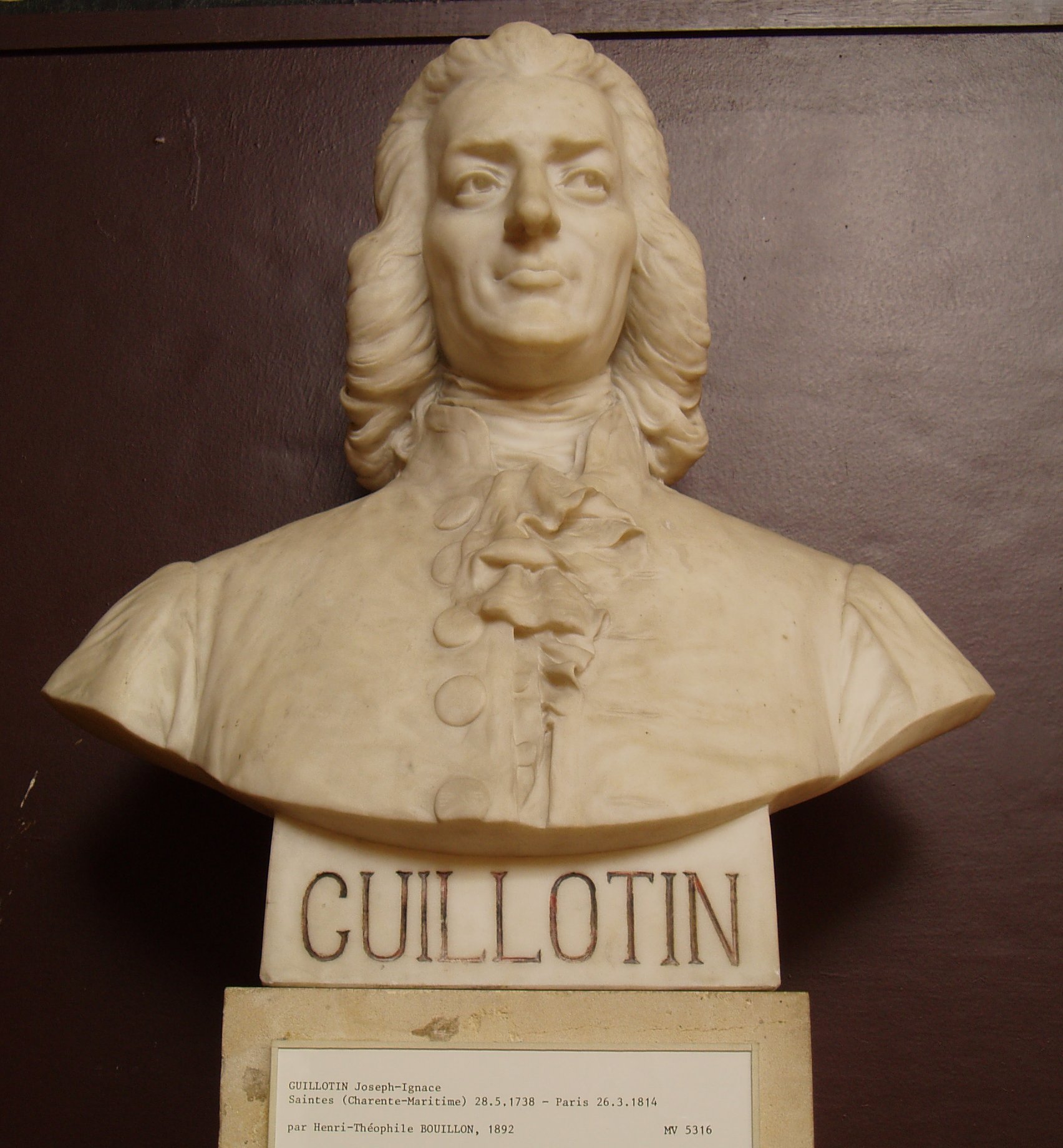
On May 28, 1743, Joseph Ignace Guillotin was born in France on this day. Later he became a doctor. As a politically active humanitarian, he was understandably disturbed by the grisly executions of the French Revolution. He was sure people could be killed more efficiently, and he proposed a device to do just that (Antoine Louis devised the gismo.)

Dr Louis' machine sliced the victim's head off by means of a heavy, suspended blade rushing down a pair of side rails onto (or more accurately through) the victim's neck. Not only was it quick and painless: in those dull years before cable, it was also great entertainment. Dr Guillotin enjoyed watching the youngsters scampering playfully about the machine, fighting for the severed head.

During the rough weather that followed the French Revolution (known to meteorologists as "The Rain of Terror") it became necessary to purge the Republic of all obstacles to the welfare of its people. Sadly, most of those obstacles were people themselves, and there were a damned lot of them.


Dr Guillotin probably died of natural causes and was not eventually guillotined (as many believe,) thus robbing us of the possible existence of a moral to his story.

(Readers seeking morals, however, are advised as always to conduct their searches elsewhere.)


May 28, 1892 -
The Sierra Club was founded, with naturalist John Muir its first President, on this date.


It would later become the United States' largest grassroots environmental organization.


May 28, 1897 -
Jell-O was introduced, fifty-two years after Peter Cooper (inventor of the Tom Thumb engine) received the first U.S. patent for a gelatin dessert, on this date. Pearl B. Wait, a carpenter and cough medicine manufacturer from LeRoy, New York, produces varieties in strawberry, raspberry, orange, and lemon fruit flavors, dubbed Jell-O by his wife, May Davis Wait.


When sales turn out to be poor, Wait sells his Jell-O business for $450 to his neighbor, Orator F.Woodward, who had founded the Genesee Pure Food Co. two years earlier. Success will come slowly, but with Woodward’s creative sales and sampling strategies, Jell-O began will begin to catch on. In 1902, when he launches his first advertising campaign in Ladies’ Home Journal, sales will reach $250,000. So remember there's always room for the juice of boiled calves hooves.


May 28, 1908 -
Ian Lancaster Fleming, the writer of the James Bond character, was born in London, on this date.


Serving as a naval intelligence officer during the Second World War, he drew largely on this experience to create the character of James Bond, an international man of mystery, working at the highest levels of British intelligence.


May 28, 1930 -
The Chrysler Building, the premier Art Deco skyscraper in New York City, had it's opening ceremony, on this date. Standing 1,047 feet (319 meters) high, it was briefly the world's tallest building before it was overtaken by the Empire State Building in 1931. With the construction of One World Trade Center, it was been again relegated to the third tallest building in New York City.

The skyscraper, designed by architect William Van Alen, was originally built to house the Chrysler Corporation. The groundbreaking occurred on September 19, 1928. At the time, the builders of New York were engaged in an intense competition to build the world's tallest skyscraper. The Chrysler Building was erected at an average rate of four floors per week and no workers were killed during construction. Just prior to its completion, the building stood about even with the rival project 40 Wall Street, designed by H. Craig Severance. Severance quickly increased the height of his project by two feet and claimed the title of the world's tallest building (this distinction excluded structures that were not fully habitable, such as the Eiffel Tower).


Van Alen secretly obtained permission to build a spire that was hidden inside the building during construction. The spire, measuring 125 feet (58.4 meters) long and composed of Nirosta stainless steel, was hoisted to the top of the building on October 23, 1929. The added height allowed the Chrysler Building to surpass both 40 Wall Street and the Eiffel Tower as the tallest building and the tallest structure in the world. It was also the first man-made structure to stand taller than 1,000 feet (305 meters). The steel chosen to cap the building was Krupp KA2 "Enduro" Steel (you may buy me a drink after you win a bar bet with that bit of knowledge).


In less than a year, the Chrysler Building was surpassed in height by the Empire State Building. Van Alen's satisfaction was further muted by Walter Chrysler's refusal to pay his fee.


May 28, 1944 -
The thrice married, former prosecutor, businessman, transvestite, former Republican mouthpiece for an inveterate liar from the state of New York, and inveterate drunkard and butt dialer Sir Rudolph William Louis Giuliani III, was born on this date.


I have nothing else to say about this man - he should live well and be healthy.


May 28, 1959 -
America launched a Jupiter rocket on this date, containing a rhesus monkey named Able and a squirrel monkey named Miss Baker. After experiencing nine minutes of microgravity, the capsule successfully returns to Earth with both monkeys intact.


However, Able died during surgery to remove his electrodes. Able was then stuffed and mounted and is now on display at the Smithsonian Institute of Air and Space Museum.


There is no truth to the rumor that Miss Baker went on to carry on a long term dalliance with President Kennedy and Frank Sinatra.


May 28, 1972 -
The virtually exiled King Edward VIII, (styled the Duke of Windsor by his brother King George VI in 1936,) died on this day in 1972 in Paris. He was buried at Windsor Castle. It was the first time that his widow, the Duchess was a royal guest of the Queen.


According to Sarah Bradford, the royal biographer, the Queen Mother, who had for 36 years resented the fact that the Duke's undying love for the horse faced, possible transvestite Mrs. Simpson had put her husband on the throne right at the threshold of war and had condemned him to an early death (She conveniently forgot that her husband was a very heavy smoker from early adulthood and that his family was prone to cancer), was very solicitous about the senile Duchess and took care of her during the funeral. The Queen did not weep for her uncle, but, strangely enough, when the Duchess followed him in death 14 years later, the Queen did weep at her funeral.


May 28, 1987 -
German teenager Matthias Rust lands his Cessna in Moscow's Red Square, buzzing the Kremlin on the way in.


He serves 18 months in prison for this prank, which also costs the commander of the Soviet Air Command his job.

Oops.


And so it goes.